
Ever found yourself squinting at your iPhone screen while trying to enjoy a movie? It’s like trying to read a novel with a magnifying glass! Thankfully, casting your iPhone to your TV is easier than finding the lost sock in your laundry. With just a few taps, you can transform your small screen into a cinematic experience that’ll make your popcorn pop with excitement.
Understanding Casting From iPhone
Casting from an iPhone allows users to enjoy content on larger screens. Many find this feature enhances their viewing experience significantly.
What is Casting?
Casting refers to the process of wirelessly streaming content from one device to another. An iPhone can send videos, music, and photos to compatible smart TVs or devices through Wi-Fi. This technology usually relies on protocols like AirPlay, which enables seamless communication between Apple devices and supported TVs. It’s straightforward; with just a few taps on the iPhone, users connect and begin enjoying their favorite media on a larger display.
Benefits of Casting to TV
Casting to a TV presents numerous advantages. Users experience a larger viewing area, integrating entertainment into a communal environment. The sharing of photos and videos during gatherings becomes effortless. Additionally, casting allows for better sound quality, enhancing the overall audio experience. Using an iPhone for casting usually offers improved battery efficiency compared to streaming directly on the TV. Finally, the ability to control playback from the iPhone provides convenience, allowing users to manage their viewing without being close to the screen.
Methods to Cast iPhone to TV
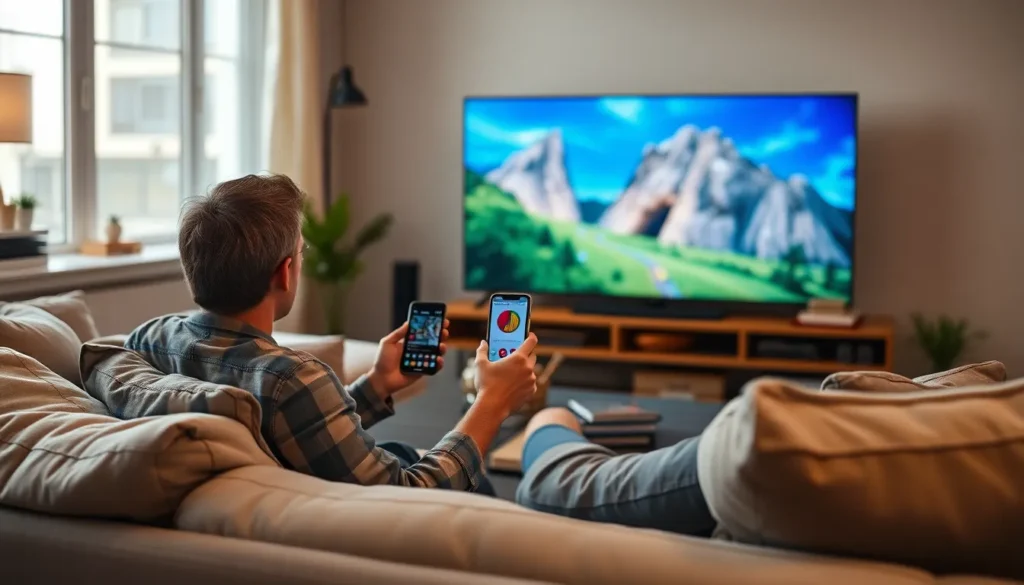
Numerous methods exist for casting an iPhone to a TV. Each option provides unique benefits to enhance viewing experiences.
Using AirPlay
AirPlay serves as Apple’s built-in solution for streaming media from iPhone to compatible TVs. Users access AirPlay by swiping down to open the Control Center and selecting “Screen Mirroring.” A list of available devices appears. Selecting a compatible TV initiates the connection, allowing users to display photos, videos, or even mirror the entire screen. Ideal for Apple TV users, AirPlay enables seamless integration and provides high-quality streaming without additional apps. With its user-friendly interface, casting becomes a straightforward process.
Using Third-Party Apps
Numerous third-party apps facilitate casting from iPhone to TV, expanding options beyond built-in features. Apps like YouTube and Netflix have native casting options. By tapping the cast icon, users connect to available devices. Additionally, options like AllCast and BubbleUPnP support various media formats, broadening compatibility. Installation is usually simple, with most apps available through the App Store. Notably, these applications often enhance features such as playback controls and access to extensive libraries. Adopting a third-party app can provide more flexibility and functionality for casting media.
Setting Up Your TV for Casting
Casting from an iPhone to a TV is straightforward, but ensuring compatibility and preparing the TV are essential steps.
Checking Compatibility
Confirm that the TV supports casting protocols like AirPlay or Chromecast. Smart TVs from brands like Samsung, LG, Sony, and Vizio usually have this capability. The latest software updates may enhance compatibility, so checking for updates often helps. iPhones running iOS 12 or newer typically connect smoothly with compatible devices. If a device lacks built-in support, consider using an external option like Apple TV or a Chromecast for casting abilities.
Preparing Your TV for Connection
Setup begins with connecting the TV to the same Wi-Fi network as the iPhone. This alignment allows seamless communication between devices. Access the TV’s settings menu to enable screen mirroring or AirPlay, depending on the model. Many TVs display a notification or prompt for incoming connections, aiding in the process. Adjusting any display settings to enhance resolution may improve the viewing experience. Consider restarting the TV if connection issues occur, refreshing its network settings.
Troubleshooting Common Issues
Casting an iPhone to a TV can occasionally present challenges. Identifying and resolving these common issues can enhance the overall experience.
Connection Problems
Connection problems often create frustration during casting sessions. Ensure both the iPhone and TV remain connected to the same Wi-Fi network. Updating the firmware on the TV frequently fixes compatibility issues. Restarting the router can also refresh the connection and improve performance. Disabling any VPN services on the iPhone may resolve interference that disrupts casting. Checking the settings for AirPlay or screen mirroring on the TV can help establish a successful connection.
Audio and Video Sync Issues
Audio and video sync issues can disrupt viewing enjoyment. Adjusting the settings on the TV sometimes aligns the audio with the video. Checking the app settings for streaming content may also reveal options to adjust audio delays. Restarting both devices often clears temporary glitches that lead to disparities. An interrupted Wi-Fi connection might contribute to lag; stabilizing the connection can remedy this. Using high-quality streaming apps tends to minimize these issues.
Casting an iPhone to a TV transforms the way users enjoy their favorite content. With just a few taps they can elevate their viewing experience to new heights. Whether using AirPlay or third-party apps there’s an option for everyone.
By ensuring compatibility and following simple setup steps users can easily connect their devices. Troubleshooting common issues also helps maintain a seamless experience. Embracing this technology not only enhances entertainment but also brings people together during movie nights or gatherings.
Ultimately casting from an iPhone to a TV is a game-changer for anyone seeking a more immersive and enjoyable way to watch their favorite shows and movies.